
My Experience at the Airbnb Summit: Do High Ratings Really Mean High Income?
Snowball Rentals
A one-stop Airbnb short-term rental property management company, helping homeowners improve rental returns through short-term rentals.
Service account
You provide the home; we do the work. Enjoy high short- and mid-term rental income!
📢 REDnote: 阿蓝聊民宿
💌 Message us for an assessment: how much could your home earn on Airbnb?
Last year, in mid-September 2025, I was invited to Airbnb’s San Francisco headquarters for the nationwide Airbnb Professional Hosts summit.
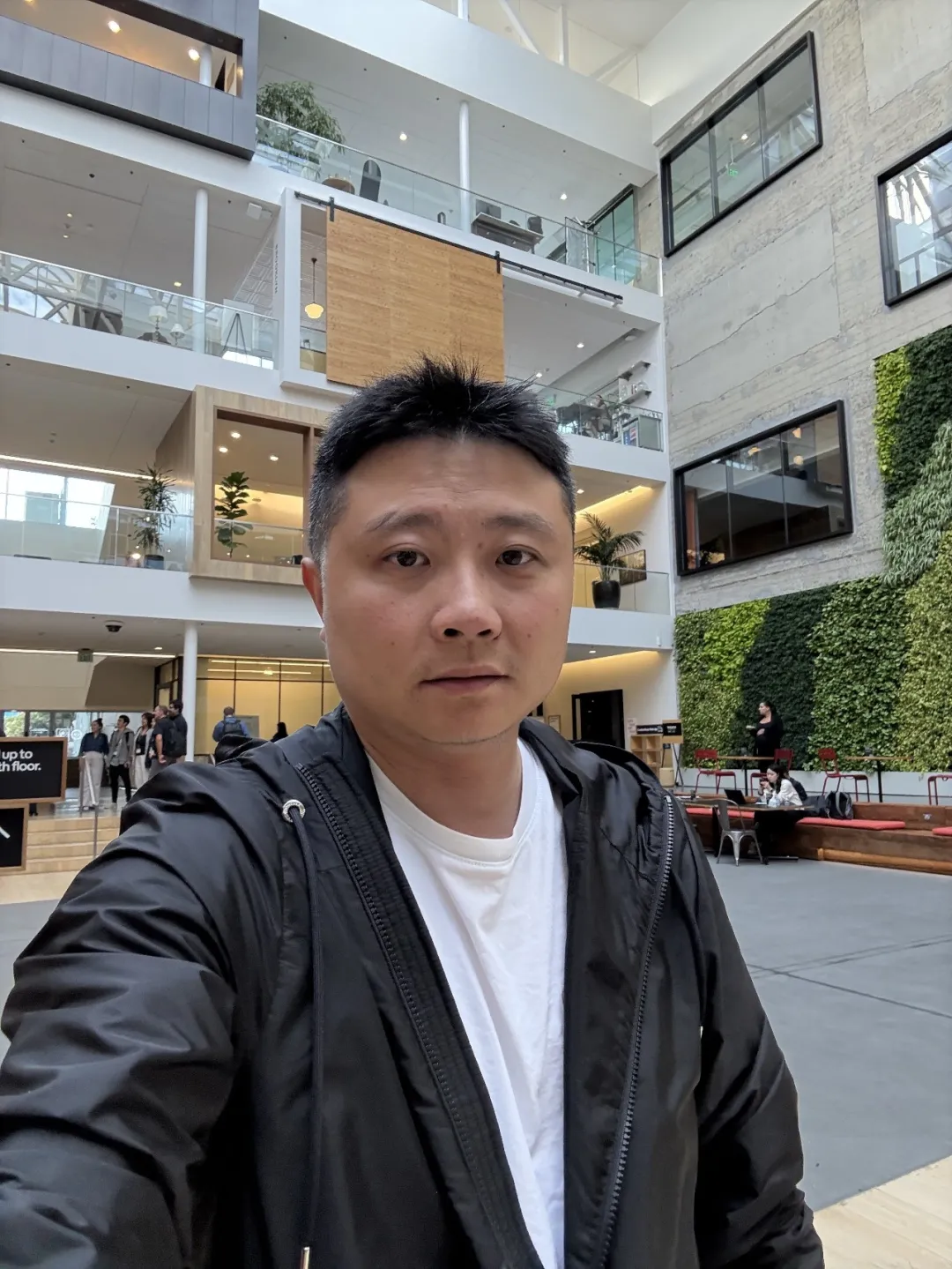
Original author photograph accompanying the Airbnb headquarters summit account; not property-income evidence or a hotel listing.
Around 200 professional hosts from across the US attended.
One presentation was delivered personally by Airbnb CEO Brian Chesky. I no longer remember the details, but two themes dominated the talk:
First: quality, quality, quality.
Airbnb wanted hosts to keep improving property quality and pursue higher ratings.
Second: discounts, discounts, discounts.
It wanted hosts to lower prices so more guests could book.
During the Q&A, a professional host in the audience asked a question that went to the heart of the issue.
He said:
High quality comes at a cost. How could Airbnb ask hosts to improve quality when there is no profit?
Translated into Chinese, this means:
High quality costs money. If hosts cannot earn a profit, how can Airbnb ask them both to improve quality and lower prices?
The room fell silent. This was the question many hosts had been asking themselves.
Over the past two years, I believe many hosts have had painful lessons from Airbnb’s rating system. Many ask the same questions:
Should I pursue high ratings regardless of cost?
Do higher ratings really make more money?
Is paying guests hundreds or even thousands of dollars to avoid a negative review really worthwhile?
Honestly, I wrestled with this question for a long time. Eventually, I realized something:
Airbnb is a new platform. But the accommodation business is not new at all.
If we look back at an industry developed over more than a hundred years—the hotel industry—we can find answers to many of these questions.
First: is the purpose of a high rating really to earn money?
It is one of the world’s best-known luxury hotel brands. Many Four Seasons properties charge more than US$1000 per night.
Four Seasons is not publicly listed, so we cannot see its complete financial statements.
But in 2021, Bill Gates’s investment company, Cascade Investment, spent US$2.2 billion to increase its stake in Four Seasons. The company’s overall valuation then was close to US$10 billion.
A company pursuing quality at a loss could not achieve such a valuation.
The conclusion is simple:
Four Seasons does not pursue high quality simply because it loves service.
It pursues exceptional service for one reason:
High quality allows higher prices and, with clear market positioning, more profit.
✅ The business logic of luxury hotels is clear:
First, improve service quality;
Second, raise room rates;
Third, attract and select a more upscale guest segment;
Fourth, establish a brand;
Finally, achieve stable long-term profits.
In other words, a high rating has never been the objective. It is a means to an end.
Its aim is to raise prices and establish brand positioning.
This leads to an important conclusion: pursuing high ratings serves to raise room rates, target more upscale guests and ultimately achieve profitability.
❎ But if you find:
You have increased costs;
Your ratings have risen;
Yet room rates will not rise;
Higher prices leave the property unbooked;
And profits keep falling, or turn into losses;
Then pursuing high ratings is a false proposition.
Quality matters, but it must translate into profit.
Otherwise, operating at high cost becomes a long-term drain.
The second question: can any hotel become a Four Seasons?
Many hosts wonder: if Four Seasons succeeds through service, can any hotel become a Four Seasons by making its service exceptional?
The answer is simple: no!
Four Seasons has something even more important: location.
Let’s look at a few examples:
Four Seasons George V in Paris sits in the central Golden Triangle, within walking distance of the Champs-Élysées. Many rooms directly overlook the Eiffel Tower.
Four Seasons Bora Bora is on one of the world’s most prestigious islands, with overwater villas facing Mount Otemanu. That view cannot be replicated anywhere else.
Four Seasons Maui sits on the prime coastline of Wailea Beach in Hawaii, one of the island’s most expensive resort areas.
Four Seasons hotels do not occupy ordinary locations. You cannot turn any building into a Four Seasons simply by changing its name and service team.
From the outset, they occupy:
The best city locations;
The rarest natural scenery;
The most sought-after travel destinations;
Then use service to amplify that value.
Four Seasons’ success therefore comes from a complete system rather than a single factor:
Location + product + guest segment + service + brand + pricing.
Everything is connected.
What can Airbnb hosts learn from this?
In my view, the most important lesson is to avoid blindly competing for ratings.
First, ask yourself:
✅ Does your property have any of these foundations?
A scarce, desirable location?
A unique view?
Distinctive design?
❎ Without these foundations, if you simply keep raising costs through:
Better beds;
More complimentary items;
More compensation;
You will probably reach one outcome:
High ratings, but low profits or even losses.
What is worth learning from Four Seasons is not endless competition to provide more service.
It is how to combine product, guests, brand and pricing into a profitable model.
My conclusion is that pursuing high ratings makes sense in the following two situations because it brings high returns. Otherwise, it becomes a long-term drain!
First, if your property has at least one of the following:
A scarce, desirable location;
A unique view;
Distinctive design;
Then you should pursue high ratings—the higher the better—because they bring higher net profits. Learn how to improve quality and attract upscale guests.
Second:
If your property has no scarce features and is fairly ordinary, but is newly built or within 10 years of construction, you can also pursue high ratings, because they are relatively easy for a newer home to achieve.
Those ratings may not bring exceptionally high returns, but stable high occupancy and well-behaved guests can make operations easier.
Outside those two situations, I believe sacrificing profits to compete for higher ratings becomes a long-term drain.
As the saying goes: service is the means; profit is the result.
Hosts, what do you think?
Follow our REDnote and WeChat official accounts! We share short-term rental management insights and knowledge every week.
If you are interested in our topics, you are welcome to join the WeChat group at any time so we can discuss them together!
This Week’s Booking Results
The excitement of the 2026 World Cup in the United States, Canada and Mexico is about to begin at Seattle’s Lumen Field!
Snowball Rentals has also recently received some event-related bookings, which is particularly encouraging while the overall market is relatively weak.
Booking Result 1: US$8,782 in Rental Income for 4 Nights!
This Medina house earned an impressive $8782 in short-term rental income for June 17–21 (four nights), equivalent to $2195 per night!
Booking example 2: two consecutive bookings, with rental income of $10,126!
This Renton house received two bookings in succession:
June 19–22 (three nights): $4389, equivalent to $1463 per night!
June 23–27 (four nights): $5737, equivalent to $1434 per night!
These are actual advance bookings we have recently received for the World Cup period in June and July. We will share more bookings individually in future WeChat posts.
Do not let your home miss its chance to become a “money-printing machine” this summer!
This Week’s Short Videos
We regularly update short videos every week.
The content you need is all here.
👇🏻 Homeowners are welcome to follow us 👇🏻
Snowball Rentals
1
We also share practical vacation-rental styling plans and creative ideas to help you achieve more with less spending and keep rental income growing!
3
Xiao An’s Vacation-Rental Styling
Referral Rewards
If you are already a Snowball Rentals homeowner, you receive a US$500 referral fee for each referral.
If you are not yet a Snowball Rentals homeowner, you receive a US$250 shopping voucher for each referral.
Snowball Rentals Management
1. Full service — We provide pre-launch rental design, furniture procurement, furnishing, professional photography, online marketing, copywriting, tenant service and sales, cleaning, supply purchasing and property repairs. You only need to be a hands-off owner; we handle the rest.
2. Multi-platform promotion — We promote the home on Airbnb, VRBO, HomeAway and other mainstream platforms for maximum exposure.
3. Dynamic pricing — Using big data, we adjust prices every day according to seasonal demand, holidays, last-minute vacancy offers, weekends and local activities, maximizing the owner’s income.
4. Income-improvement SOP — We follow 44 secrets for maximizing short-term rental income, optimizing each property’s online marketing, on-site operations and other aspects to work toward maximum income.
5. Flexible owner stays — Owners can flexibly choose when to stay themselves. This is especially suitable for owners with multiple residences around the world.
6. Terminate at any time — Management does not require an annual commitment. The owner can end the agreement with one month’s advance notice.
7. Corporate housing — In addition to nightly rentals, we work with insurers and assignment companies to provide executives with hotel-style managed accommodation for stays longer than 30 days.
8. Transparent fees — For rentals longer than 30 days, we charge 15% of accommodation revenue. For nightly rentals under 30 days, we charge 20% of accommodation revenue.
Author’s tip: Personal views, for reference only.
Snowball Rentals on WeChat

Scan to follow Snowball Rentals on WeChat
阿蓝聊民宿 on REDnote

Open REDnote and scan to follow 阿蓝聊民宿